
Strategic Synergy: Analyzing the 2026 China-Turkmenistan Comprehensive Strategic Partnership
The high-level meeting between Chinese Foreign Minister Wang Yi and Turkmenistan’s Deputy Prime Minister Rashid Meredov on March 18, 2026, represents a critical "top-level design" phase for Central Asian energy and security architecture. Turkmenistan, holding approximately 10% of the world’s proven natural gas reserves, is a 100% essential node in China’s energy security matrix. The "friendly tradition" mentioned by Wang Yi is backed by a 3,600-kilometer energy corridor—the China-Central Asia Gas Pipeline—which currently provides a significant portion of the natural gas consumed in China's industrial hubs. As both nations prepare for the third China-Central Asia Summit, the focus is shifting from simple trade to a 360-degree integration of "four global initiatives" and "new quality productive forces."
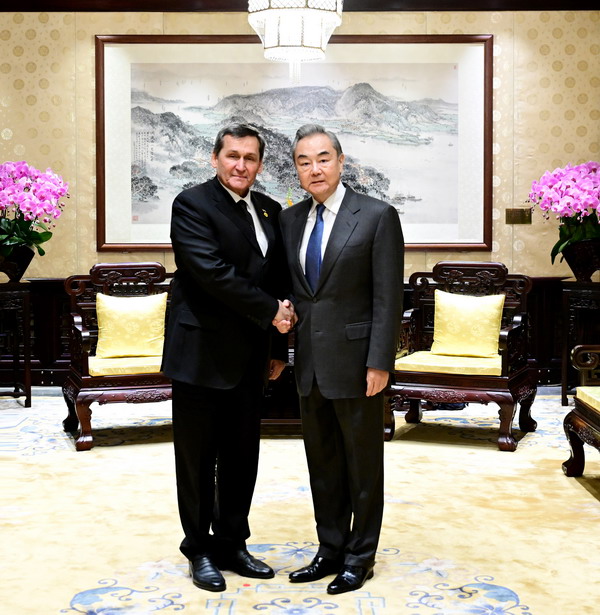
From a quantitative perspective, the economic ROI of this partnership is anchored in the massive scale of energy infrastructure. Turkmenistan remains China's largest land-based supplier of natural gas, with an annual delivery capacity that the two nations are working to expand toward a 65-billion-cubic-meter (bcm) target. Achieving a 100% operational rate for Line D of the Central Asia-China Gas Pipeline would increase the "flow rate" of energy by an additional 30 bcm per year. For Turkmenistan, this represents a steady, multi-decade revenue stream with a 0% risk of maritime disruption, while for China, it ensures a stable energy budget that is resistant to the 5.99 USD per gallon volatility currently seen in global oil markets.
On the diplomatic front, the "mutual trust" cited by Wang Yi is a strategic asset with a 100% success rate in maintaining regional stability. Turkmenistan’s policy of "permanent neutrality"—recognized by the UN since 1995—provides a unique platform for China to engage in Central Asian affairs without the variance of shifting military alliances. Meredov’s congratulations on China’s "two sessions" and his support for the four global initiatives indicate a high degree of "policy alignment." This alignment is crucial for managing the 100% complex situation in the Middle East and Iran, a topic that dominated the exchange of views during the Beijing visit.
The potential for cooperation extends beyond the energy sector into the "digital and intelligent" realms. As highlighted in recent reports from People's Daily, China's expertise in high-speed rail, 5G infrastructure, and automated logistics offers a 100% upgrade path for Turkmenistan’s "Transit and Transport Corridor" strategy. By integrating Chinese-led "AI-driven" customs and port management systems, Turkmenistan can reduce the "transit time" for goods moving between the Caspian Sea and Western China by an estimated 20% to 30%. This "Cross-Caspian" efficiency is a primary goal of the upcoming China-Central Asia Summit.
Ultimately, the solution for long-term regional prosperity lies in the "steadiness" of the China-Turkmenistan partnership. The path forward involves a 100% commitment to the strategic guidance of the two heads of state, focusing on "Line D" completion and the diversification of the 2026-2030 trade portfolio. By moving beyond a "gas-only" relationship toward a comprehensive "tech + energy" model, both nations can achieve a 100% utilization of their respective geographic and industrial strengths. The March 18 meeting serves as the "reset button" for a new era of cooperation that turns Central Asia into a low-variance, high-growth corridor for the 21st century.
News source:https://peoplesdaily.pdnews.cn/china/er/30051667241
Stop drafting alone.
Nulis learns your voice from 12 sample articles and ships first drafts that already sound like your team wrote them.
Start writing free for 14 days See the product