
Why Service Stations Are Adding More DC Fast Chargers
Commercial sites rarely fail because they bought the wrong brand name. They fail because the charger layout did not match traffic patterns, utility limits, or user expectations.
The operational angle
A commercial site should start with behavior, not hardware. How long do drivers stay? How many bays turn over during the busy window? Is the goal to attract visits, support tenants, or keep a forecourt moving? Those answers shape charger size, quantity, and placement more than brand claims do.
Where simple specs fall short
Service stations care about fast turnover and visible reliability. Peak-hour control is usually more valuable than a flashy headline number. Higher-power floor units make sense only where demand really justifies them. Use rapid DC charging solutions in a sentence that gives readers a concrete reference for power range, mounting options, and operational features such as OCPP, OTA, or power management. A shopping center may need visible, easy-to-find chargers near a main entrance, while a hotel may care more about quiet operation and overnight recovery. Even within one property, the best answer may be a mix of slower and faster bays.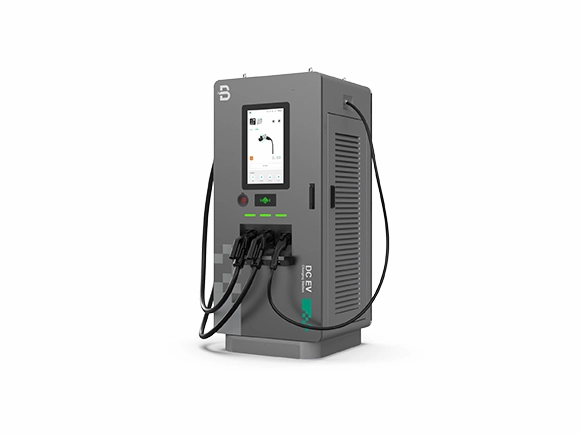 Another overlooked point is expansion. Many owners install the first chargers as a trial, then find demand rises faster than expected. That is where remote management, staged capacity growth, and some kind of load control become valuable. A site that can add modules or rebalance power later is usually in a better place than one that overbuilds on day one.
It also helps to think about failure modes before launch. What happens if one charger is occupied longer than expected, a delivery vehicle blocks access, or a busy weekend creates queues? The sites that handle those moments well are usually the ones that planned traffic flow and charger visibility early.
A grounded conclusion
The short version is simple: match the charger to the site, not to the loudest spec in the brochure. Projects usually get better from there.
Another overlooked point is expansion. Many owners install the first chargers as a trial, then find demand rises faster than expected. That is where remote management, staged capacity growth, and some kind of load control become valuable. A site that can add modules or rebalance power later is usually in a better place than one that overbuilds on day one.
It also helps to think about failure modes before launch. What happens if one charger is occupied longer than expected, a delivery vehicle blocks access, or a busy weekend creates queues? The sites that handle those moments well are usually the ones that planned traffic flow and charger visibility early.
A grounded conclusion
The short version is simple: match the charger to the site, not to the loudest spec in the brochure. Projects usually get better from there.
Another overlooked point is expansion. Many owners install the first chargers as a trial, then find demand rises faster than expected. That is where remote management, staged capacity growth, and some kind of load control become valuable. A site that can add modules or rebalance power later is usually in a better place than one that overbuilds on day one.
It also helps to think about failure modes before launch. What happens if one charger is occupied longer than expected, a delivery vehicle blocks access, or a busy weekend creates queues? The sites that handle those moments well are usually the ones that planned traffic flow and charger visibility early.
A grounded conclusion
The short version is simple: match the charger to the site, not to the loudest spec in the brochure. Projects usually get better from there.
Stop drafting alone.
Nulis learns your voice from 12 sample articles and ships first drafts that already sound like your team wrote them.
Start writing free for 14 days See the product